Indian Head One Cent: Types, Key Dates and How to Check
Quick answer
The Indian Head one cent was struck 1859–1909; the 1909-S (309,000 made) and 1877 (852,500) are the key dates. Types, varieties and checks.
Updated 2026-09-25 · Sources: Wikipedia, usacoinbook.com, jmbullion.com, executivecoin.com
Have one? Scan it to see what it's worth.
Download on the App StoreWhat are the key facts?
- Years struck: 1859–1909
- Designer: James Barton Longacre, Chief Engraver of the U.S. Mint
- Composition 1859–1864: 88% copper, 12% nickel; 4.67 g
- Composition 1864–1909: Bronze, 95% copper with tin and zinc; 3.11 g
- Diameter: 19 mm (USA CoinBook)
- Total struck: Over 1.8 billion (Executive Coin)
- Lowest mintage: 1909-S: 309,000
- Highest mintage: 1907: 108,138,618 (Wikipedia)
- Mint mark: Only on 1908-S and 1909-S, below the wreath on the reverse; all other dates are Philadelphia with no letter
- Common date, worn: $2.50 in G4 for 1900–1908 Philadelphia coins (USA CoinBook, February 2026)
What the Indian Head one cent is
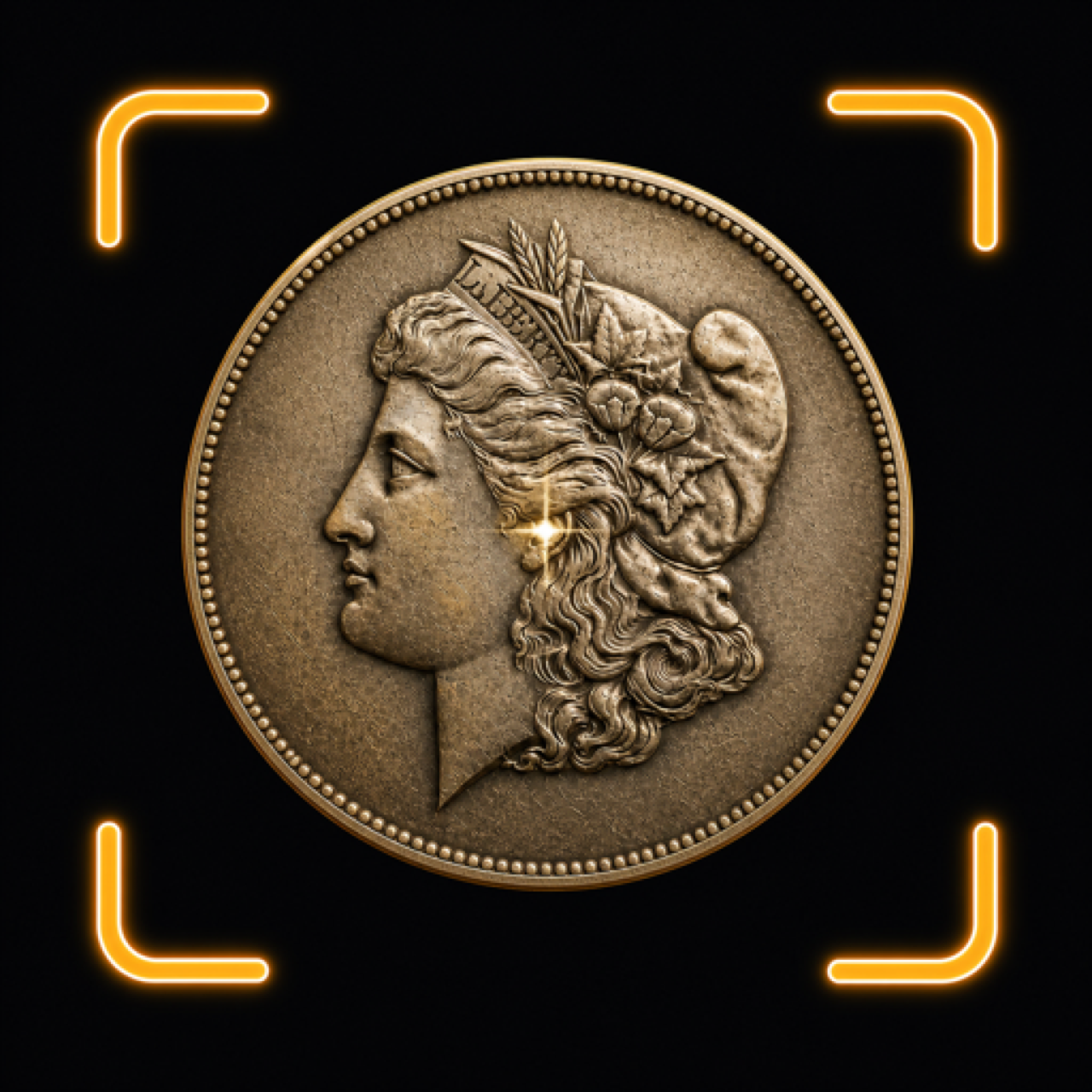
The Indian Head one cent is the U.S. small cent struck from 1859 to 1909, between the Flying Eagle cent and the Lincoln cent. The portrait is not a real Native American: it is Liberty wearing a feathered headdress. James B. Longacre said the face was based on a statue, the Crouching Venus, then on loan in Philadelphia; Wikipedia calls the popular story that his daughter Sarah posed for it essentially false. Longacre argued that the feather headdress suited an American Liberty better than the Phrygian cap used on earlier coins.
The Flying Eagle cent it replaced (1857–1858 for circulation) was hard to strike: the eagle's head and the wreath sat opposite each other on the two sides, and the tough copper-nickel metal did not fill both fully (Wikipedia). In 1909 the Indian Head was replaced by Victor D. Brenner's Lincoln cent, the first regular U.S. coin to show a real person. If your coin shows Lincoln, go to the 1909 Lincoln cent page.
The three types of Indian Head cent
- 1859, copper-nickel, laurel wreath. One year only, 88% copper and 12% nickel, 4.67 g, with a plain laurel wreath around ONE CENT on the back.
- 1860–1864, copper-nickel, oak wreath with shield. Same metal and weight; the back now has an oak wreath with a small shield at the top.
- 1864–1909, bronze. 95% copper with tin and zinc, 3.11 g, same design as the shield type.
Weight is the quickest way to tell the metals apart: a copper-nickel cent is about 1.5 g heavier than a bronze one. Bronze came in because of the Civil War. People hoarded coins, nickel ran short, and privately made bronze tokens showed that the public would accept base-metal coins. The Coinage Act signed on April 22, 1864 authorized bronze cents (Wikipedia). That is why 1864 exists in both metals.
Varieties inside the series
- 1864 with L on the ribbon. During 1864 Longacre added his initial L to the ribbon at the back of Liberty's headdress, so bronze 1864 cents exist with and without it. The L version is the scarcer one ($73 in G4 against $21 without, USA CoinBook, February 2026).
- 1873 Closed 3 and Open 3. Chief Coiner A. Loudon Snowden complained that the 3 looked like an 8, so the date punch was changed (Wikipedia). The two are priced about the same; the rare 1873 is the Doubled LIBERTY die variety.
- 1886 Type 1 and Type 2. Charles E. Barber reworked the portrait during a pause in production. On Type 1 the lowest feather of the headdress points between the I and C of AMERICA; on Type 2 it points between the C and the final A. About 14 million of the 17.65 million 1886 cents are Type 1 (Wikipedia).
- 1908-S and 1909-S. An act of April 24, 1906 allowed base-metal coins to be struck at branch mints, and San Francisco made the only Indian Head cents not struck in Philadelphia: 1,115,000 in 1908 and 309,000 in 1909 (Wikipedia).
- Overdates and doubled dates. The 1869/9, 1888/7 and 1894 Double Date show traces of another digit under the date and are listed separately in price guides.
Key dates and what makes an Indian Head penny rare
Three things make an Indian Head cent rare: a low mintage, a die variety, or a coin in far better condition than normal.
- Low mintage. The 1909-S (309,000) and 1877 (852,500) are the only two dates under one million; Wikipedia attributes the 1877 figure to a weak economy and little demand for cents. The 1908-S (1,115,000) and the 1869 to 1872 dates (all between about 3.9 and 6.4 million) are the next group.
- Varieties. 1864 L, 1869/9, 1873 Doubled LIBERTY, 1888/7 and 1894 Double Date.
- Condition. Common dates become valuable only at the very top of the grading scale. CoinValueChecker reports a 1902, a date with 87 million struck, sold for $144,000 in PCGS MS68 Red (Stack's Bowers, 2022), and a 1899 for $108,000 in MS68 Red (Heritage, 2019).
See Indian Head penny value by year for prices of every date.
How to check an Indian Head penny in five steps
- Read the date. Compare it with the key dates above. A date from 1880 to 1908 with no S is a common coin unless it is in top condition.
- Turn it over and look below the wreath. A small S there means San Francisco, which only happened in 1908 and 1909.
- Weigh it. About 4.67 g means copper-nickel (1859–1864), about 3.11 g means bronze. An 1864 cent can be either.
- Use a magnifier on the date and ribbon. Look for a second digit under the 9 of 1869, the 8 of 1888 or the whole 1894 date; for doubling in LIBERTY on an 1873; and for the L on the ribbon of an 1864 bronze cent. On an 1886, note where the lowest feather points.
- Do not clean it. United Patriot Coin says cleaning takes 30% to 50% off the value, and original red color earns the highest premium. For a key date, get the coin certified by PCGS or NGC before selling.
Selling or buying Indian Head cents
United Patriot Coin says a dealer typically pays 60% to 70% of retail, so the guide prices on our value page are what you would pay to buy, not what you would receive. Retail stock is wide: Executive Coin listed more than 200 Indian Head cents from $11 to $5,670 when we checked in September 2026, most under $250. For common dates, bulk lots are the normal market; for key dates and top-grade coins, certified coins sold through auction bring the most. Photographing the coin in the app reads the date and type so you can sort a group before you price it.
How this page was made
Research and drafting for this page were assisted by AI and checked line by line against the sources listed below. Prices are copied from the named price guide or auction report with its date; where a figure could not be confirmed we say so rather than estimate. If you find an error, tell us and we will correct it.
FAQ
What are the key dates for Indian Head pennies?
The 1877 (852,500 struck) and 1909-S (309,000), followed by the 1908-S, 1869, 1870, 1871 and 1872. The main varieties are the 1864 L, 1869/9, 1873 Doubled LIBERTY, 1888/7 and 1894 Double Date.
What makes an Indian Head penny rare?
A low mintage (1877, 1909-S, 1908-S), a die variety such as an overdate, or unusually high condition. Most dates from 1880 to 1908 were struck in tens of millions and are common in worn grades.
What makes a 1907 Indian Head penny valuable today?
Only top condition or a genuine error. 1907 has the highest mintage of the series, 108,138,618 (Wikipedia), so a worn one is about $2.50 in G4 and $81 in MS63 (USA CoinBook, February 2026).
What makes a 1900 Indian Head penny valuable today?
The same as other late dates: 66,831,502 were struck, so value comes from condition. USA CoinBook lists $2.50 in G4, $12 in XF40 and $81 in MS63 (February 2026).
What makes a 1902 Indian Head penny valuable?
An ordinary 1902 is common (87,374,704 struck, $2.50 in G4 per USA CoinBook). The big price is for perfect coins: CoinValueChecker reports $144,000 for a PCGS MS68 Red at Stack's Bowers in 2022.
Is the Indian Head penny a portrait of a real Native American?
No. It is Liberty wearing a feathered headdress. Longacre said the face came from a statue of Venus; the story that his daughter posed is considered essentially false (Wikipedia).
More in Indian Head Penny Value and Guide (1859–1909)
Related
See what your coins are really worth.
Start with a single scan.
Have one? Scan it to see what it's worth.
Sources
- Wikipediaen.wikipedia.org/wiki/Indian_Head_cent
- usacoinbook.comwww.usacoinbook.com/coins/small-cents/indian-head-cent/
- jmbullion.comwww.jmbullion.com/coin-info/cents/indian-head-pennies/
- executivecoin.comexecutivecoin.com/coins-by-type/u-s-cents-1793-present/u-s-indian-head-cents-185
- unitedpatriotcoin.comunitedpatriotcoin.com/blogs/blog/indian-head-penny-value-guide-2025
- coinvaluechecker.comwww.coinvaluechecker.com/rare-indian-head-penny-worth-money/
Compiled by the CoinLens editorial team
Every fact on this page is taken from the sources listed above; numbers and prices are copied from the source, and prices name the guide or auction and its date. Research and drafting were assisted by AI, and each claim was then checked against the cited sources. Checked 2026-09-25. We do not buy, sell or grade items; the app identifies what you photograph and points you to these references.